
 561-338-0420
Every winter, thousands of skiers and snowboarders make their way to Oregon’s mountains, Mount Hood, Mount Bachelor, and Willamette Pass, for powder runs and weekend getaways. Most trips end with nothing worse than sore legs and a sunburn. But when a collision happens on a crowded run, or someone gets hurt because a lift malfunctioned, the questions start piling up fast. Who’s responsible? Can you sue? What if the other skier just took off?
Oregon has specific laws governing these situations, and they’re not always intuitive. The state’s Skiing Activities Act sets out the rights and responsibilities of everyone involved, from the person carving down an intermediate slope to the resort that maintains the chairlifts. Understanding these rules can make the difference between recovering compensation for your injuries and being left with nothing but medical bills.
This guide walks through what Oregon law actually says, what it means for your case, and what you need to do if you’ve been injured on the slopes.

Introduction to the Skiing Activities Act
Oregon’s Skiing Activities Act is codified under ORS 30.970 through 30.990. It was enacted to address the inherent risks of downhill skiing and snowboarding while still holding both participants and ski areas accountable when someone acts negligently or fails to maintain safe conditions.
The law does a few things at once. It defines the duties that skiers and snowboarders owe to each other. It lays out what ski area operators must do to keep their mountains reasonably safe. And it establishes strict procedural rules, including notice requirements and statutes of limitation, that injured parties must follow if they want to pursue a claim.
One of the law’s core principles is the concept of “inherent risk.” Skiing and snowboarding are dangerous activities. You can hit a tree, catch an edge, or collide with another person, even when everyone is being careful. The Act acknowledges this reality and limits liability for injuries caused by risks that are simply part of the sport. At the same time, it doesn’t give anyone a free pass to ski recklessly or let a resort ignore broken equipment.
The statute applies to downhill skiing, snowboarding, and other sliding activities at ski areas. It doesn’t cover cross-country skiing, sledding outside designated areas, or activities that happen off resort property.
Related Article(s)
Common Causes & Injuries in Oregon Ski & Snowboard Accidents
What to Do After a Ski Accident in Oregon
Duties of Skiers, Snowboarders, and Uphill Riders
Oregon law imposes specific duties on everyone using the slopes. These aren’t suggestions, they’re legal obligations. If you violate one of these duties and injure someone else, you can be held liable.
Under ORS 30.975, every skier and snowboarder must:
Maintain control at all times. This is the foundation of the entire statute. You’re required to ski or ride in a manner that allows you to stop or avoid other people and objects. It doesn’t matter if you’re an expert on a black diamond run or a beginner on a bunny slope; you have to stay in control. If you’re going too fast to stop when someone falls in front of you, you’re violating this duty.
Yield to downhill skiers and riders. If you’re the uphill person, you’re responsible for avoiding collisions with anyone below you. The downhill skier generally has the right of way. This rule exists because the person ahead of you can’t see you coming, while you have a clear view of them. It doesn’t give the downhill skier the right to make sudden, unpredictable movements, but the uphill skier bears the primary responsibility for avoiding a collision.
Avoid stopping in hazardous or obstructed places. You can’t just stop in the middle of a narrow trail or right below a blind rollover. If you need to rest or adjust your bindings, move to the side of the run where you’re visible to others. Stopping in a dangerous spot can make you liable if someone runs into you, even though they’re technically the uphill skier.
Look uphill before starting downhill or merging. Before you push off from a stopped position or merge onto a trail, you have to check that you’re not cutting off someone who’s already moving. This is similar to merging into traffic on a highway; you don’t have the right of way just because you want to start moving.
Obey all posted signs, warnings, and closures. If a trail is marked as closed or a sign warns of hazards, you’re legally required to follow it. Ignoring a closure and getting hurt can eliminate your ability to sue the resort, and if you injure someone else while skiing in a closed area, you’re almost certainly going to be held liable.
 Wear retention straps or devices on skis or snowboards. Runaway equipment is dangerous. Oregon law requires you to use straps, brakes, or other devices designed to prevent your skis or board from sliding away if they come off. If your board shoots down the mountain and hits someone, you can be held responsible.
The statute also addresses “uphill traffic”, people who are hiking up a ski run or using climbing skins. Under ORS 30.977, anyone traveling uphill on a ski run must stay to the side of the trail and yield to all downhill traffic. Uphill riders can’t obstruct the trail or create hazards for people skiing down.
These duties apply equally to beginners and experts. The law doesn’t care if it’s your first day on skis; you’re still required to stay in control and follow the rules. Courts have consistently held that inexperience is not a defense to a negligence claim based on a violation of these statutory duties.
Let's Settle For More... Get Your FREE Case Review Today.
Let's Settle For More... Get Your FREE Case Review Today.
Duties of Ski Area Operators
Ski resorts aren’t just passive landlords. Under ORS 30.985, Oregon law requires ski area operators to take specific steps to maintain safe conditions and warn users of known hazards.
A ski area operator must:
Mark trails by difficulty. Runs have to be designated as beginner, intermediate, advanced, or expert, using standard symbols and colors. This allows skiers to make informed decisions about which trails match their skill level. A resort can’t just throw a random rating on a trail; the designation has to reasonably reflect the terrain and obstacles.
Install and maintain signs. Operators must post signs at the top of each trail indicating its difficulty, and they must place warning signs near hazards that aren’t inherent to the sport. For example, a resort has to warn about a hidden drop-off or a section of trail that merges unexpectedly. But they don’t have to put up a sign warning that trees are hard if you hit them; that’s an inherent risk.
Mark the boundaries of the ski area. Skiers need to know when they’re leaving resort property and entering uncontrolled terrain. Boundary markers must be clearly visible and maintained throughout the season.
Maintain ski lifts and equipment. Chairlifts, tow ropes, and other mechanical devices have to be inspected regularly and kept in safe working order. If a lift malfunction causes an injury, the resort can be held liable.
Provide reasonable avalanche control and snow grooming. While resorts aren’t required to make every slope perfectly smooth, they do have a duty to manage known avalanche hazards and maintain trails in a reasonably safe condition. This includes removing or marking obstacles, filling in dangerous holes, and warning skiers when conditions are unusually hazardous.
Comply with the Passenger Tramway Safety Board. Oregon has a state board that regulates ski lifts and tramways. Operators must follow the board’s safety standards and inspection requirements.
One thing the statute does not require is a guarantee of safety. Skiing is dangerous, and resorts aren’t liable for every injury that happens on their property. The key question is whether the resort breached one of these specific duties or created a hazard that went beyond the inherent risks of the sport.
Resorts also have limited immunity under ORS 30.990 for injuries caused by inherent risks, things like variations in terrain, snow conditions, icy patches, bare spots, moguls, or collisions with natural objects like trees and rocks. But this immunity disappears if the resort knew about a specific hazard and failed to warn skiers or take reasonable steps to address it.
For example, if a resort knows that a particular lift tower is damaged and could collapse, they can’t just leave it there and claim immunity when someone gets hurt. On the other hand, if a skier hits a tree that was visible from the trail, the resort generally won’t be liable; hitting trees is an inherent risk of skiing.
Statutes of Limitation and the 180-Day Notice Rule
Oregon imposes strict deadlines for bringing ski injury claims, and missing these deadlines usually means your case is over before it starts.
Two-Year Statute of Limitations
Under ORS 30.988, you have two years from the date of your injury to file a lawsuit arising from a skiing accident. This applies to claims against other skiers, snowboarders, and ski area operators.
The clock starts ticking on the day you were injured. If you wait until day 731 to file your complaint, the court will dismiss your case, and it won’t matter how strong your evidence is.
There are very limited exceptions to this rule. If the injured person is a minor, the statute may be tolled until they turn 18, but even then, the claim must be filed within a reasonable time after the disability is removed. Courts don’t extend the deadline simply because you didn’t realize you had a claim or because you were waiting to see how your injuries developed.
180-Day Notice Requirement for Claims Against Ski Area Operators
Here’s where things get tricky. If you’re planning to sue a ski area operator, you must provide written notice of your claim within 180 days of the injury. This is not the same as filing a lawsuit; it’s a separate notice requirement that comes first.
The notice must be sent to the ski area operator and must include:
- The date and location of the incident
- A description of the injury
- The circumstances surrounding the injury
- The name and contact information of the injured person
This notice requirement is found in ORS 30.988(2). It’s a condition precedent to filing a lawsuit against a resort, which means if you don’t send the notice within 180 days, you lose your right to sue, even if the two-year statute of limitations hasn’t expired yet.
The purpose of this rule is to give the resort an opportunity to investigate the incident while the evidence is still fresh. Ski patrol reports, witness statements, and physical conditions on the mountain can change or disappear quickly, and the legislature decided that resorts should get prompt notice so they can gather evidence to defend themselves.
You don’t need to send the notice by certified mail, but it’s a good idea. You want proof that the resort received it and when. Sending it by email without a read receipt or handing it to a lift operator probably won’t cut it.
Timeline Overview
Here’s how the deadlines work together:
- Day 1: You’re injured on the slopes
- Day 180: Deadline to send written notice to the ski area operator (if you’re planning to sue the resort)
- Day 730 (2 years): Deadline to file a lawsuit against the ski area operator, another skier, or any other party
If you’re only suing another skier, not the resort, you don’t need to worry about the 180-day notice. You just have to file your lawsuit within two years.
Missing the 180-day notice deadline is one of the most common mistakes people make in Oregon ski injury cases. A lot of injured skiers assume they have two years to figure everything out, and by the time they talk to a lawyer, the notice deadline has already passed. At that point, their claim against the resort is gone.
When You Can Sue Another Skier or Resort
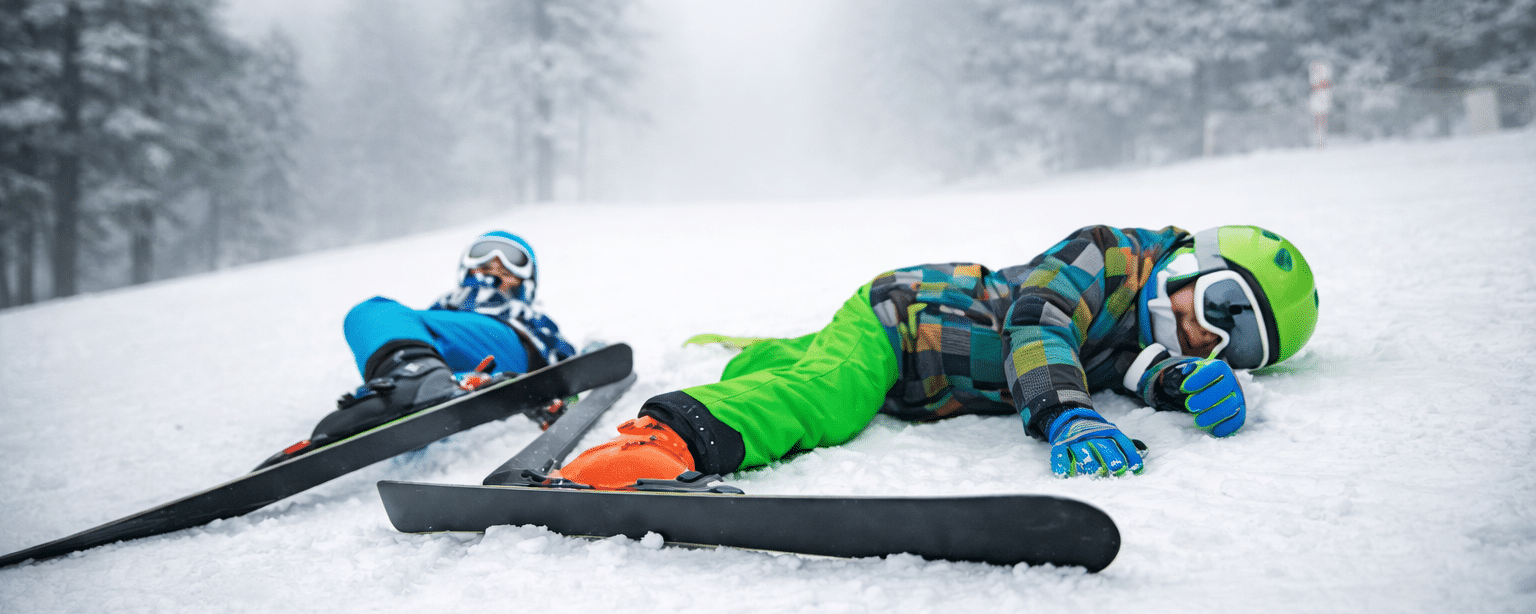
Not every ski injury gives rise to a viable lawsuit. Oregon law recognizes that skiing is inherently dangerous, and participants assume certain risks when they choose to go down the mountain. But that doesn’t mean you’re out of luck if someone else’s negligence caused your injury.
Suing Another Skier or Snowboarder
You can sue another skier or snowboarder if they violated one of the statutory duties outlined in ORS 30.975 and that violation caused your injury.
Common scenarios include:
Out-of-control skier collisions. If someone was skiing too fast to stop or avoid you, they breached their duty to maintain control. This is one of the most common types of ski collision cases.
An uphill skier hits a downhill skier. The uphill skier is almost always at fault in these cases unless the downhill skier made a sudden, unpredictable movement that the uphill skier couldn’t avoid.
Skier stops in a blind spot or a dangerous location. If someone stopped in the middle of a narrow chute or just over a rollover, and you collided with them, they may be liable, even though you were the uphill skier.
Skier disobeys signs or skis in a closed area. If someone was skiing in a closed area or ignored a warning sign and caused a collision, you may have a strong case against them.
The challenge in these cases is often identifying the other skier. Unlike car accidents, there’s no license plate to trace. A lot of ski collisions end with the at-fault skier just taking off down the mountain. If you can’t identify them, you can’t sue them.
This is why it’s important to get the other person’s information at the scene if at all possible. If they leave, report the incident to ski patrol immediately. The resort may have photos from lift cameras or records of season pass holders who were in the area at the time.
Suing the Ski Area Operator
You can sue a ski resort if it breached one of its statutory duties and that breach caused your injury. This most commonly happens in cases involving:
Lift malfunctions. If a chairlift breaks down, stops suddenly, or drops someone due to a mechanical failure, the resort can be held liable.
Failure to warn of hidden hazards. If the resort knew about a dangerous condition, like a hidden tree well, an unmarked cliff, or a section of trail with exposed rocks, and failed to post adequate warnings, you may have a claim.
Negligent grooming. If the resort’s grooming created a dangerous condition (for example, leaving large ice chunks on a beginner trail or failing to fill in a deep hole), it may be liable.
Failure to close a dangerous trail. If conditions on a trail are so hazardous that it should be closed, but the resort leaves it open without adequate warnings, injured skiers may have a claim.
Inadequate avalanche control. If the resort knew or should have known about avalanche danger and failed to close the area or perform adequate mitigation, it can be held responsible for resulting injuries.
Keep in mind that resorts have immunity for injuries caused by inherent risks. A mogul field that’s hard to navigate, a patch of ice on an advanced run, or a tree at the edge of a trail are all inherent risks. You can’t sue the resort just because skiing is hard.
But when the resort creates a hazard through its own actions or fails to address a known danger, that immunity goes away.
Comparative Fault
Oregon follows a modified comparative fault system under ORS 31.600. This means that even if you were partially at fault for your own injury, you can still recover damages, as long as your fault is not greater than the combined fault of all other parties.
For example, if a jury finds that you were 30% at fault and the other skier was 70% at fault, you can recover 70% of your damages. But if you were 51% at fault, you recover nothing.
This comes up a lot in ski cases. Maybe you were skiing a little too fast, but the other person wasn’t looking where they were going. Or maybe you stopped in a less-than-ideal spot, but the uphill skier was completely out of control. The jury will apportion fault between the parties, and your recovery will be reduced accordingly.
Let's Settle For More... Get Your FREE Case Review Today.
Let's Settle For More... Get Your FREE Case Review Today.
Frequently Asked Questions
Do I need to file a police report after a ski collision?
There’s no requirement to file a police report for a ski collision on private resort property. However, you should report the incident to ski patrol immediately. They’ll create an incident report, which can be valuable evidence later. If the collision happened on public land or involved a criminal act, you might want to contact law enforcement.
What if the other skier left the scene, and I don't know who they are?
This is a common problem. Start by reporting the incident to ski patrol right away. The resort may have photos from lift cameras or records that could help identify the person. Ask anyone nearby if they saw what happened or know the other skier. Get their contact information. If you can’t identify the at-fault skier, you may not be able to pursue a claim against them, but you might still have a claim against the resort if they contributed to the accident.
Can I sue if I got hurt skiing in the backcountry outside the resort boundary?
Probably not. The Skiing Activities Act applies to injuries that occur within the boundaries of a ski area. If you ducked a rope and went out of bounds, or if you were skiing in the backcountry on public land, the statute doesn’t apply. You’d have to prove your case under general negligence principles, and you may have assumed the risk by leaving the controlled ski area.
My child was injured at ski school. Can I sue the instructor or the resort?
It depends. If the instructor violated a duty owed to the child, for example, by taking them on terrain that was beyond their ability without adequate supervision, you may have a claim. The same 180-day notice rule applies if you’re suing the resort, so act quickly. Document everything the instructor said and did, and get witness information from other parents or students who were there.
What if I signed a waiver when I bought my lift ticket?
Oregon law allows ski resorts to use liability waivers, but they’re not bulletproof. A waiver can’t protect a resort from liability for gross negligence or willful misconduct. And even a well-drafted waiver may not prevent you from suing another skier who hit you. Whether a waiver is enforceable depends on its specific language and the circumstances of your injury. An attorney can review the waiver and advise you on whether it bars your claim.
How much is my ski injury case worth?
The value of your case depends on the severity of your injuries, the amount of your medical bills, your lost wages, and the degree of fault on each side. Serious injuries, broken bones, head trauma, and spinal injuries result in higher settlements and verdicts than minor sprains or bruises. If you were partially at fault, your recovery will be reduced proportionately. An experienced attorney can evaluate your case and give you a realistic estimate after reviewing the facts.
What should I do immediately after a ski accident?
Get medical attention first, don’t downplay your injuries. Report the incident to ski patrol and get a copy of their report. Take photos of the scene, your injuries, and any equipment involved. Get contact information for any witnesses. If the other skier is still there, exchange information with them. Don’t post about the accident on social media; insurance companies will use your posts against you. Finally, contact a lawyer as soon as possible, especially if you’re thinking about a claim against the resort. Remember that 180-day notice deadline.
Can I still ski while my lawsuit is pending?
Yes, but be careful. If you’re claiming that you suffered a permanent injury that prevents you from skiing, and then the defense finds photos of you carving down a black diamond six months later, your credibility is shot. Be honest about your limitations, and follow your doctor’s advice about when and how you can return to physical activity.
If you’ve been injured in a ski accident on an Oregon mountain, the procedural rules can feel overwhelming, especially when you’re still recovering. The 180-day notice requirement doesn’t give you much time to decide whether to pursue a claim, and missing that deadline can cost you everything.
At ELG Injury Law, we’ve helped clients navigate ski injury cases and understand their rights under Oregon’s Skiing Activities Act. We can review what happened, advise you on whether you have a claim, and make sure all the necessary notices and filings are handled correctly.
Don’t let the clock run out. If you have questions about a ski or snowboard accident, reach out to us for a free consultation. We’ll give you straight answers about your case and help you figure out the best path forward.
Last updated Monday, January 5th, 2026