
 561-338-0420
Oregon’s Cascade Mountains draw thousands of skiers and snowboarders each winter, offering world-class terrain from the glaciated slopes of Mount Hood to the volcanic peaks near Bend. But the same conditions that make these resorts appealing—steep chutes, deep powder, and unpredictable weather—also create serious risks. Resort accidents happen more often than many visitors realize, and when they do, understanding your rights becomes essential.
If you’ve been injured at an Oregon ski area, or if someone you love was hurt on the mountain, you’re dealing with more than medical bills and lost time at work. You’re facing questions about what went wrong, who’s responsible, and whether the resort could have done more to prevent it. These aren’t always simple answers, and the legal landscape around ski resort liability can be confusing. This guide walks through the hazards unique to Oregon’s resorts, the legal options available after an accident, and how an experienced attorney can help you move forward.

Overview of Oregon’s Major Ski Resorts
Oregon’s ski industry centers on a handful of well-known destinations, each with its own terrain, clientele, and safety record. Here’s a closer look at where most incidents occur:
Mount Hood Meadows operates on the eastern face of Mount Hood and sees heavy traffic throughout the season. With 85 trails spread across 2,150 acres, the resort attracts both families and advanced skiers. Its mid-mountain terrain includes narrow runs and exposed sections where collisions and falls are common, especially during peak weekends when lift lines stretch and slopes get crowded.
Timberline Lodge sits higher on Mount Hood and offers year-round skiing on Palmer Glacier. The historic lodge is a draw for tourists, but the upper mountain terrain demands respect. Whiteout conditions can develop quickly, and the resort has seen its share of serious accidents involving skiers who ventured beyond marked boundaries or misjudged the grade of advanced runs.
Mount Bachelor, located west of Bend, is Oregon’s largest ski area by skiable acreage. Its 4,300 acres include wide-open bowls and backcountry-style terrain that can lull riders into a false sense of security. Wind holds, and sudden weather shifts are frequent, and the mountain’s size means help isn’t always nearby when something goes wrong.
Willamette Pass offers a smaller, quieter experience southeast of Eugene. While it doesn’t see the volume of Mount Hood or Bachelor, accidents still happen, particularly on its steeper black-diamond trails and in the terrain park, where features can cause hard falls if riders misjudge their approach.
Hoodoo and Anthony Lakes round out the state’s resort options. Hoodoo, near Santiam Pass, is popular with families from the Salem and Eugene areas. Anthony Lakes, tucked into the Blue Mountains in eastern Oregon, attracts skiers looking for solitude and powder. Both resorts are smaller operations, but that doesn’t eliminate risk. Inadequate signage, poorly maintained equipment, or delayed responses to injuries can lead to serious harm at any-sized resort.
Let's Settle For More... Get Your FREE Case Review Today.
Let's Settle For More... Get Your FREE Case Review Today.
Common Hazards and Recent Incidents
Ski resort accidents stem from a mix of environmental conditions, equipment failures, human error, and operational decisions. Some hazards are inherent to the sport. Others are preventable—and that distinction matters when determining liability.
Related Article(s)
Common Causes & Injuries in Oregon Ski & Snowboard Accidents
Collisions and Overcrowding
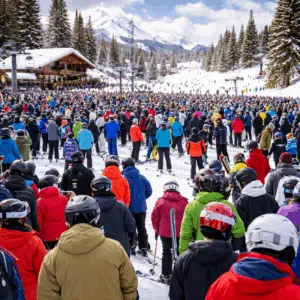 Collisions between skiers, or between a skier and a stationary object, account for a significant portion of resort injuries. When trails are packed—something that happens regularly at Mount Hood Meadows and Mount Bachelor on winter weekends—the likelihood of someone losing control and crashing into another person increases.
Narrow cat tracks, blind rollovers, and congested areas near lift unloading zones are common collision sites.
In recent years, Oregon resorts have reported incidents where skiers traveling at high speed struck slower-moving beginners, resulting in fractures, concussions, and spinal injuries.
While skiers are expected to maintain control, resorts also bear some responsibility for managing traffic flow, posting warnings, and designing runs that minimize hazards.
Lift Malfunctions and Operator Error
Chairlift accidents are rare, but when they happen, injuries can be severe. Mechanical failures, improper loading, or operator inattention have caused falls from lifts at Oregon resorts in the past. A 2019 incident at Timberline relating to a sudden stop and subsequent injuries raised questions about maintenance protocols and staff training.
Getting on and off a chairlift requires coordination, and not every skier—especially children or first-timers- manages it smoothly. Lift operators are supposed to slow or stop the lift when they see trouble, but lapses occur. Injuries from falling while loading or unloading often involve broken bones or head trauma.
Unmarked Hazards and Inadequate Signage
Skiers rely on resorts to mark dangerous terrain, close unsafe areas, and provide clear guidance about difficulty levels. When a resort fails to rope off an icy patch, doesn’t update signage after conditions change, or leaves obstacles like exposed rocks or tree stumps unmarked, accidents follow.
Mount Bachelor has faced criticism in recent years when rapid snowmelt exposed hazards that should have been flagged or closed. Willamette Pass has dealt with complaints about unclear trail markings that led intermediate skiers onto terrain beyond their ability. These failures aren’t just operational oversights; they can form the basis of a negligence claim.
Avalanche Risk and Backcountry Access
Oregon resorts generally manage avalanche risk within their boundaries, but the line between in-bounds and out-of-bounds terrain isn’t always obvious. Timberline’s upper mountain and Mount Bachelor’s northwest territory both offer access points to uncontrolled backcountry, and skiers occasionally wander into dangerous zones without realizing it.
While resorts aren’t typically liable for injuries in marked backcountry areas, they do have a duty to make boundaries clear. If a skier crosses into avalanche terrain because signage was missing or gates were left open, the resort’s responsibility comes into question.
Weather-Related Visibility and Ice
Oregon’s maritime climate means conditions can shift fast. Fog, sleet, and sudden snow squalls reduce visibility to near zero, and icy patches form on exposed trails. Resorts are expected to monitor conditions and adjust operations accordingly, closing trails when ice makes them unmanageable or suspending lifts during severe weather.
When resorts keep terrain open despite unsafe conditions, injuries spike. Falls on ice are a leading cause of wrist fractures, shoulder dislocations, and knee injuries. If a resort prioritized ticket sales over safety, that decision can be challenged in court.
Terrain Park Injuries
Terrain parks are built for tricks, jumps, and rails, and they come with inherent risk. But resorts still have obligations: features must be designed properly, landings maintained, and hazards padded or marked. Jumps that are too steep, rails placed too close together, or landings that turn icy all increase injury risk.
Hoodoo and Mount Hood Meadows both operate terrain parks that see frequent use, and both have dealt with injuries ranging from minor sprains to catastrophic head trauma. Whether the resort is liable depends on whether the feature was designed and maintained according to industry standards.
Liability and Legal Options for Resort Accidents
Oregon law recognizes that skiing is an inherently risky activity, but that doesn’t mean resorts are immune from lawsuits. Understanding where the line falls between assumed risk and negligence is key to evaluating any potential claim.
Oregon’s Ski Safety Act
Oregon Revised Statutes Chapter 30.970 to 30.990 outlines the responsibilities of both ski area operators and skiers. The law acknowledges inherent risks, things like variations in terrain, weather changes, and the actions of other skiers, and limits resort liability for injuries arising from those risks. But the statute doesn’t protect resorts from liability when they fail to meet their duties.
Resorts are required to mark trails according to difficulty, maintain equipment, train staff, and warn guests about known hazards. If a resort violates these obligations and someone gets hurt as a result, the injured party can pursue compensation despite the Ski Safety Act’s protections.
Proving Negligence
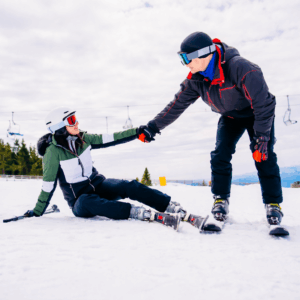 To succeed in a ski resort injury claim, you’ll need to show that the resort breached a duty of care and that breach caused your injury. This often involves gathering evidence that might not be immediately obvious: maintenance logs, incident reports, witness statements, weather data, and photos of the scene.
For example, if you were injured on a chairlift because the operator was distracted and failed to stop the lift when you struggled to unload, your attorney would seek records of operator training, previous incidents involving that lift, and any internal communications about safety concerns.
If you fell on an icy trail that should have been closed or treated, your lawyer would look for evidence that the resort knew about the ice and chose to leave the trail open anyway.
Resorts often argue that the injured skier assumed the risk or was partially at fault. Oregon uses a comparative negligence system, meaning your recovery can be reduced if you’re found partially responsible—but you can still recover damages as long as your fault is less than the defendant’s.
When Third Parties Are Involved
Not every ski resort accident is the resort’s fault. Collisions caused by reckless skiers, defective equipment sold by a third-party retailer, or injuries during a lesson provided by an independent instructor can all shift liability away from the resort.
If another skier crashed into you, that person may be personally liable for your injuries. If a binding failed and caused a fall, the manufacturer could be at fault. An experienced attorney will assess all potential sources of liability to ensure you’re pursuing the right claim against the right party.
Steps to Take After a Resort Accident
What you do in the hours and days following a ski resort injury can significantly affect your ability to recover compensation. Here’s how to protect your rights:
Get medical attention immediately. Even if the injury seems minor, see ski patrol or head to the nearest emergency room. Some injuries, like concussions or internal bleeding, aren’t immediately apparent. A prompt medical evaluation creates a record of your injuries and their severity.
Report the accident to the resort. Make sure ski patrol or resort management documents what happened. Get a copy of the incident report if possible. Resorts are required to keep records of accidents, and those reports can be critical evidence later.
Take photos and gather information. If you’re able, photograph the scene, including trail conditions, signage, and any hazards that contributed to the accident. Get contact information from witnesses. Note the time, weather, and visibility conditions.
Preserve equipment and clothing. Don’t repair or discard damaged skis, boots, helmets, or clothing. These items may be examined later to determine what went wrong.
Avoid giving recorded statements. Resort representatives or insurance adjusters may ask for a statement while you’re still on the mountain or shortly after. Politely decline until you’ve consulted an attorney. What you say can be used to minimize your claim.
Keep all medical records and bills. Track every doctor’s visit, prescription, imaging test, and therapy session. Keep records of lost wages and any other financial losses tied to the injury.
Contact an attorney before accepting any settlement. Resorts and their insurers often offer quick settlements that seem appealing when you’re facing medical bills. These early offers rarely reflect the full value of your claim, especially if you’re dealing with long-term injuries or ongoing treatment.
Let's Settle For More... Get Your FREE Case Review Today.
Let's Settle For More... Get Your FREE Case Review Today.
How an Oregon Ski Accident Lawyer Can Help
Ski resort injury cases are more complex than typical personal injury claims. They involve specialized statutes, technical questions about resort operations, and defendants with significant resources and legal teams. Handling a claim on your own puts you at a disadvantage.
An experienced Oregon ski accident attorney brings several advantages to your case:
Investigation and evidence gathering. Your lawyer will obtain records that aren’t accessible to the public—maintenance logs, employee training files, prior incident reports, and internal safety audits. These documents often reveal patterns of negligence that strengthen your claim.
Expert consultation. Proving that a resort breached its duty of care often requires expert testimony from ski industry professionals, engineers, or safety consultants. Your attorney will identify and work with the right experts to support your case.
Negotiation with insurers. Ski resorts carry substantial liability insurance, but insurers will work hard to minimize payouts. An attorney who understands how these claims are valued can negotiate effectively and push back against lowball offers.
Litigation when necessary. Many ski accident claims settle, but some require filing a lawsuit. If the resort refuses to offer fair compensation, your lawyer will be prepared to take the case to trial and present your story to a jury.
Guidance through Oregon’s legal deadlines. Oregon imposes strict time limits on injury claims. Generally, you have two years from the date of the accident to file a lawsuit, but exceptions and shorter deadlines can apply depending on the circumstances. Missing a deadline can forfeit your right to compensation entirely.
Protection of your financial recovery. A serious ski accident can lead to long-term medical care, rehabilitation, and lost earning capacity. Your attorney will work to ensure the settlement or verdict accounts for future costs, not just what you’ve already spent.
You don’t pay anything up front when you hire a personal injury lawyer. These cases are handled on a contingency fee basis, meaning your attorney is paid a percentage of your recovery only if you win. If there’s no recovery, you owe nothing.
Schedule a Free Consultation
If you or someone you care about was injured at an Oregon ski resort, you deserve answers. Was the accident truly unavoidable, or did the resort fail to meet its responsibilities? Could better maintenance, clearer signage, or more attentive staff have prevented what happened?
These questions matter, and they have legal answers. A free consultation with an Oregon ski accident lawyer gives you a chance to understand your options without any obligation. You’ll get a clear assessment of your case, an explanation of what to expect, and guidance on the best path forward.
Don’t let a resort or its insurer convince you that you have no claim or that your injuries are just part of the sport. Get the facts, protect your rights, and make an informed decision about your next steps. Reach out today.
Last updated Monday, January 5th, 2026